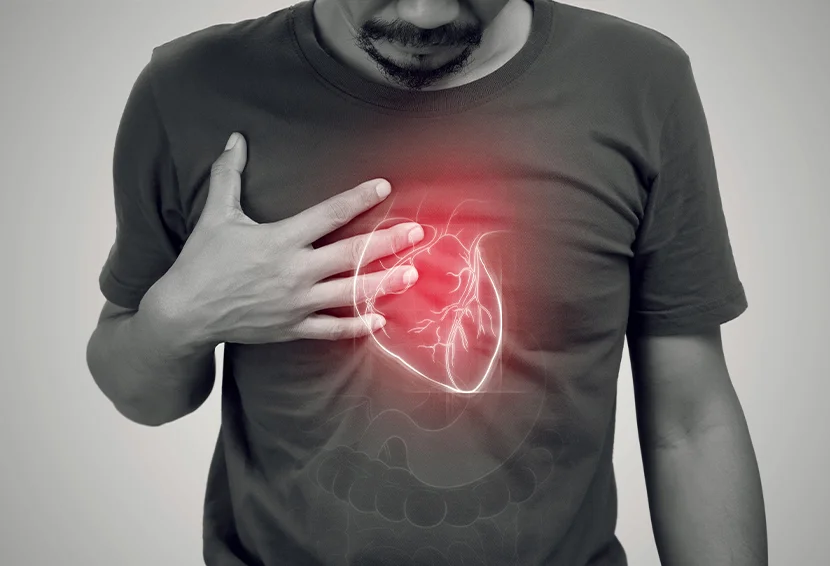
Sudden chest pain can appear differently from person to person.
| Symptom | More Likely Heart-Related | More Likely Non-Heart |
| Pressure or squeezing | Yes | Sometimes |
| Burning after meals | Rare | Common |
| Pain spreading to jaw/arm | Common | Rare |
| Worse during exercise | Common | Less common |
| Improves with antacids | Rare | Common |
| Shortness of breath | Common | Sometimes |
| Pain lasting a few seconds | Less common | More common |
| Sweating + nausea | Common | Rare |
The problem is that symptoms often overlap. That’s why self-diagnosis is risky.
Here is the list:
Think of angina like your heart sending a low-fuel warning.
The heart muscle needs oxygen constantly. When narrowed arteries reduce blood flow, the heart struggles during physical activity or stress.
This causes chest discomfort called angina.
Common Angina Symptoms
There are different types of angina.
| Type of Angina | What Happens |
| Stable Angina | Predictable pain during activity |
| Unstable Angina | Sudden pain even at rest |
| Prinzmetal Angina | Caused by artery spasm |
| Microvascular Angina | Small artery dysfunction, common in women |
Why Unstable Angina Is Dangerous
Unstable angina is often considered a medical emergency because it may happen before a heart attack.
If chest pain suddenly becomes:
seek emergency cardiology care immediately.
A heart attack occurs when blood flow to part of the heart is severely reduced or blocked long enough to cause damage to the heart muscle (detected by blood tests and ECG).
Imagine bending a garden pipe so tightly that water stops flowing. The heart muscle downstream begins to suffer damage quickly.
This is why timing matters.
Classic Heart Attack Symptoms
Many people expect dramatic movie-style symptoms.
But reality can be different.
Especially in women, older adults, and diabetics, symptoms may appear as:
That’s why confusing gas vs heart attack symptoms can become dangerous.
Gas vs Heart Attack: How to Tell the Difference
This is one of the most searched chest pain questions online.
Here’s a simplified comparison.
| Feature | Gas/Acidity | Heart Attack |
| Burning after eating | Common | Sometimes |
| Relief with burping | Common | Rare |
| Chest pressure | Less common | Very common |
| Pain during exercise | Rare | Common |
| Sweating | Rare | Common |
| Jaw/arm pain | Rare | Common |
| Breathlessness | Mild | Often severe |
| Symptoms improve quickly | Usually | Often persistent |
Still, symptoms overlap heavily.
If there’s uncertainty, emergency evaluation is always the safest option.
Note: Relief after burping or taking antacids may suggest acid reflux or gas-related discomfort, but it does not completely rule out a heart-related cause — especially in people with risk factors like diabetes, high blood pressure, smoking, obesity, or a history of heart disease.
Sometimes arteries suddenly tighten temporarily.
This is called coronary artery spasm.
Even without major blockage, the sudden narrowing can reduce blood supply enough to trigger severe chest pain.
Triggers May Include
Pain often occurs during rest or sleep and may feel intense and sudden.
Myocarditis means inflammation of the heart muscle.
It often develops after viral infections.
The inflammation irritates the heart tissue, causing chest pain and heartbeat abnormalities.
Symptoms Include
Young adults sometimes mistake myocarditis symptoms for anxiety or muscle strain.
The heart sits inside a thin protective sac called the pericardium.
When this lining becomes inflamed, chest pain develops.
Unlike heart attack pain, pericarditis pain often changes with body position.
Common Signs
It may happen after infections or autoimmune conditions.
This is one of the most dangerous causes of sudden chest pain.
The aorta — the body’s largest artery — develops a tear in its wall.
Patients often describe the pain as:
Pain may travel into the back.
Risk Factors
Immediate surgery is often required.
Not all chest pain comes from the heart.
In fact, many ER visits turn out to involve non-cardiac causes.
That’s why chest pain diagnosis can be tricky even for experienced doctors.
Certain factors increase the risk significantly.
| Risk Factor | Why It Matters |
| High blood pressure | Damages arteries |
| Diabetes | Accelerates artery disease |
| Smoking | Raises clot and spasm risk |
| High cholesterol | Causes plaque buildup |
| Obesity | Increases heart strain |
| Family history | Raises inherited risk |
| Sedentary lifestyle | Weakens cardiovascular health |
| Stress | Triggers heart strain and spasms |
People over 45 (men) and 55 (women) generally carry a higher cardiovascular risks.
Never ignore sudden chest pain if it includes:
Here’s a simple rule:
If chest pain feels unusual, intense, or frightening — seek help.
Many people delay treatment because they hope symptoms will disappear.
That delay can be dangerous during a heart attack.
Emergency cardiology teams at Artemis Cardiac Care work fast because heart muscle damage worsens over time.
| Test | Purpose |
| ECG/EKG | Measures heart electrical activity |
| Blood tests | Detect heart muscle injury |
| Chest X-ray | Evaluates lungs and heart size |
| CT Scan | Looks for clots or aortic tears |
| Echocardiogram | Ultrasound of the heart |
| Angiography | Detects blocked arteries |
Doctors combine symptoms, history, and tests together before making a diagnosis.
In many cases, yes.
Heart health works a lot like maintaining plumbing.
If pipes stay clean and pressure stays controlled, flow remains smooth.
8 simple prevention strategies include:
Small lifestyle improvements consistently lower heart disease risk over time. However, if you notice any symptoms like sudden chest pain, timely clinical evaluation is crucial.
Sudden chest pain is one of the body’s loudest warning signals.
Sometimes it’s acid reflux.
Sometimes anxiety.
But sometimes it’s the heart urgently asking for help.
The difficult part is that symptoms often overlap.
That’s why doctors always take chest pain seriously.
Understanding angina symptoms, knowing the difference between gas vs heart attack signs, and recognizing when emergency cardiology care is needed can save lives.
If chest pain appears suddenly, feels severe, spreads to other areas, or comes with sweating or breathlessness — don’t wait for certainty.
Getting checked early is always safer than ignoring the warning signs your body may be trying to send.
When sudden chest pain strikes, timely diagnosis and expert cardiac care can make all the difference. Artemis Cardiac Care is known for advanced emergency cardiology services, experienced heart specialists, and comprehensive cardiac treatment facilities.
Our Hospitals
Treatments Available
From emergency heart care to advanced cardiac procedures, Artemis Cardiac Care centers are equipped to manage chest pain, heart attacks, angina, and other complex cardiovascular conditions with expert precision.
Call us at +91 9070902010 (24/7).
Disclaimer: This article is for informational purposes only and not medical advice. Sudden chest pain may indicate a serious condition. Seek immediate medical attention for severe, persistent, or unexplained symptoms.

Consultant Cardiology Department
Meet the doctorFrom Recent Advancements in Heart Care to Tips and Tricks to make your Heart Healthy Again, stay updated with reliable and informative blogs by our experts.

 WhatsApp Us (24/7)
 +91 9070902010 (24/7)


 Previous