Symptoms, Causes & Treatment.webp)
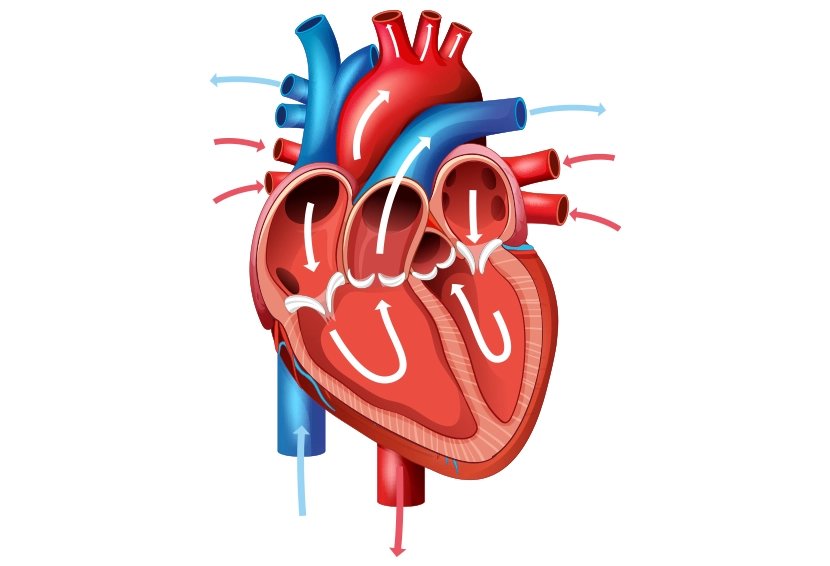
It is a disease of the heart muscle that affects its ability to pump blood effectively. With time, the heart muscle may become enlarged, thick, and stiff.
According to the American Heart Association (AHA), it may develop due to genetic and acquired problems, which might lead to heart failure or irregular heartbeats in some cases.
The different types are:
The condition can be treated by a doctor, depending on the type and individual case.
There are several medical conditions and lifestyle factors that can affect the health and function of the heart muscles. Additionally, there are also some cases with no known reason.
The causes are as follows:
Depending on the condition of an individual and the disorder’s severity, specific signs may be present. In rare cases, it may not show symptoms for a long period.
The most common symptoms are:
The condition should be immediately brought to the notice of a medical professional if these symptoms occur suddenly alongside chest pain or loss of consciousness.
It develops when the heart muscle becomes abnormally thick. This, in turn, reduces the heart’s ability to pump blood effectively.
This condition may be caused by an inherited gene mutation. In several cases, individuals may not present with any symptoms.
However, some may experience the following:
When the chambers of the heart get enlarged and weakened, it leads to dilated cardiomyopathy.
The causes include:
If left untreated, this condition may lead to fatigue, breathlessness, oedema, and other symptoms associated with heart failure.
There are several diagnostic procedures used for diagnosing the condition. For an accurate diagnosis, it is important to consult a doctor and go through the relevant procedures.
A doctor may prescribe some of the following diagnostic tests:
The main objective of the treatment is to maximize and maintain heart function, reduce the risk of other cardiac conditions, and control the symptoms.
The treatment options are:
Do not ignore these symptoms. Consult a professional cardiologist in Panipat for a timely evaluation and appropriate treatment.
You must consult a cardiologist if you are experiencing some of the following symptoms:
A doctor can offer effective treatment to get the condition under control.
Lifestyle changes cannot cure cardiomyopathy. However, they can help manage some symptoms alongside improving the overall condition of the heart, thus enhancing the effectiveness of the treatment.
The following lifestyle modifications can be effective:
According to the World Health Organization (WHO), adults should engage in at least 150 minutes of moderate-intensity physical activity per week, provided it is approved by their treating physician. https://www.who.int/news-room/fact-sheets/detail/physical-activity
Early diagnosis helps in detecting the underlying cause of the disease before it leads to severe heart problems. With the help of early intervention and treatment, it is possible to reduce the risk of heart failure significantly while managing other severe complications like irregular heartbeats, stroke, and sudden death.
It is important to schedule regular appointments with an experienced cardiologist in Panipat so that the disorder can be managed effectively.
If you are experiencing symptoms like shortness of breath, fatigue, leg swelling, irregular heartbeats, or have a family history of cardiomyopathy, you need to get in touch with an experienced cardiologist in Panipat for early diagnosis and cardiomyopathy treatment. This will ensure that your heart function is well-maintained for a long time.
Q1: What is Cardiomyopathy?
A: It is a disorder of the heart muscle that reduces its ability to pump blood effectively. The condition can be properly managed with an accurate diagnosis and the right treatment.
Q2: What is the difference between hypertrophic and dilated cardiomyopathy?
A: In hypertrophic cardiomyopathy, the heart muscle becomes abnormally thick, while in dilated cardiomyopathy, the heart chambers become enlarged and weakened.
Q3: Can Cardiomyopathy be cured?
A: Although there is no complete cure, it can be successfully managed with treatment, medication, and lifestyle modifications.
Q4: When should I consult a cardiologist?
A: You should consult a cardiologist if you experience symptoms like breathing difficulty, palpitations, chest pain, dizziness, or leg swelling, along with a family history of heart disorders.
Q5: What does cardiomyopathy treatment involve?
A: Treatment may involve a combination of medication, lifestyle modifications, and other procedures in severe cases.

Consultant Cardiologist Cardiology Department
Meet the doctorFrom Recent Advancements in Heart Care to Tips and Tricks to make your Heart Healthy Again, stay updated with reliable and informative blogs by our experts.

 WhatsApp Us (24/7)
 +91 9070902010 (24/7)


 Previous
.webp)