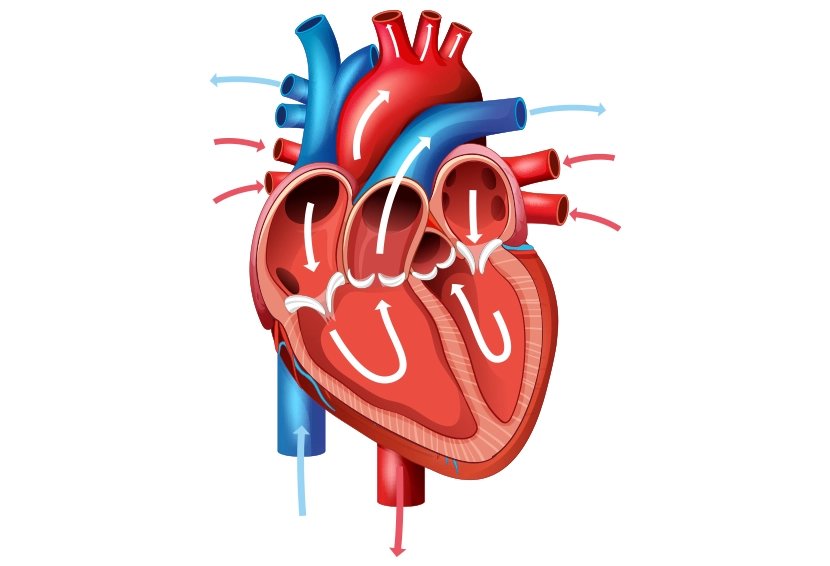
The heart has two pumping sides, which have different roles. The left ventricle sends oxygen-rich blood around the body, while the right ventricle pumps blood to the lungs for re-oxygenation.
| Feature | Left-sided failure | Right-sided failure |
| Main circulation affected | Lungs and systemic circulation | Systemic veins and tissues |
| Typical fluid buildup | Lungs | Legs, abdomen and liver |
| Common symptoms | Breathlessness, fatigue, cough | Leg swelling, abdominal swelling, weight gain |
| Common relationship | May occur independently | Often develops secondary to left-sided disease |
The American Heart Association identifies that left-sided failure can be classified according to whether the left ventricle is able to contract or relax. Reduced ejection fraction occurs when the heart fails to contract properly, while preserved ejection fraction occurs when the ventricle is stiff and does not fill normally.
Right-sided dysfunction is often secondary to disease on the left side. Increased pressure in the pulmonary circulation can place extra strain on the right ventricle, which eventually impairs its ability to move blood through the lungs.
Left-sided disease mainly affects the lungs and circulation, with common heart failure symptoms including:
The accumulation of fluid in the lungs is responsible for many of the respiratory symptoms. The NHS also identifies symptoms of breathlessness, tiredness, swelling, sudden weight gain and nighttime coughing.
Severe difficulty breathing, especially if accompanied by blue or grey lips, fainting or an inability to speak normally because of difficulty breathing, requires immediate medical attention.
With the right ventricle unable to pump blood, blood can back up in the systemic veins, leading to:
Several cardiovascular and systemic diseases can cause weakness of the heart or increase the demand placed on it. Common causes include:
The American Heart Association highlights that coronary artery disease, hypertension and other underlying cardiovascular conditions are important causes.
Right-sided dysfunction can occur as a result of left-sided disease, but can also be the result of pulmonary hypertension, chronic lung disease, congenital heart conditions or certain valve diseases.
Congestive heart failure is when impaired cardiac function is associated with fluid building up or being congested. Hence, it is not just another term for left-sided disease. Congestion can occur in the lungs, legs, abdomen or other tissues depending on which part of the circulation is impinged upon.
The American Heart Association states that fluid can accumulate when the heart is unable to pump effectively, contributing to swelling and difficulty breathing.
Heart failure diagnosis is not just based on symptoms, with a healthcare professional potentially reviewing medical history, performing a physical examination, and ordering investigations such as:
An echocardiogram can assess heart structure, pumping function, and ejection fraction. Merck Manual states that diagnosis can be supported by echocardiography, chest radiography, laboratory tests and hemodynamic assessment.
Heart failure treatment is highly dependent on the underlying cause, type of dysfunction, presence and severity of symptoms, ejection fraction and other conditions. Treatment may include:
The American Heart Association notes that treatment may involve medicines, lifestyle measures, cardiac rehabilitation, devices and procedures depending on an individual's condition.
For right-sided dysfunction, managing the underlying cause is particularly important. Diuretics can control fluid accumulation, while pulmonary hypertension, valve disease, lung illnesses, or left-sided dysfunction may require individual condition management.
Patients should not start, stop or change cardiovascular medicines without medical advice. Monitoring of weight, swelling, breathlessness and ability to exercise can help detect changes that need medical review.
Persistent breathlessness, unexplained swelling, recurrent nighttime coughing, sudden weight gain, chest discomfort, fainting or a noticeable reduction in exercise ability should be medically assessed.
A cardiologist in Ludhiana can assess suspected cardiac disease, perform investigations such as an ECG and echocardiography to determine the likely cause, and recommend management. People already diagnosed with cardiac dysfunction may also benefit from regular follow-up with a cardiologist in Ludhiana or their cardiac-care team.
Q1: Which is more serious, left or right heart failure?
A: Both can pose serious risks, and severity depends on the underlying cause, cardiac function and other factors. They can also occur together, so individual review is needed.
Q2: Can left-sided failure cause right-sided failure?
A: Yes. Left-sided dysfunction can cause increased pressure in the pulmonary circulation, placing additional strain on the right ventricle. Over time, this can lead to right-sided dysfunction.
Q3: Can heart failure be treated?
A: While there is no universal cure at the moment, appropriate medicines, lifestyle measures, devices and procedures can control symptoms and improve outcomes for many patients.
Q4: What swelling is common in right-sided heart failure?
A: Swelling often affects the feet, ankles and legs and may also involve the abdomen. Fluid accumulation occurs due to increased pressure in the systemic venous circulation.
Q5: When is breathlessness an emergency?
A: Severe shortness of breath, gasping, blue or grey skin or lips, or loss of consciousness requires emergency medical attention.
Left- and right-sided cardiac dysfunction have different predominant patterns, but can influence each other. Recognizing changes in breathing, swelling, weight and exercise capacity can help prompt timely evaluation. If symptoms are persistent or worsening, consult a qualified cardiologist for an individual assessment rather than relying on symptoms alone.
From Recent Advancements in Heart Care to Tips and Tricks to make your Heart Healthy Again, stay updated with reliable and informative blogs by our experts.

 WhatsApp Us (24/7)
 +91 9070902010 (24/7)


 Previous
.webp)