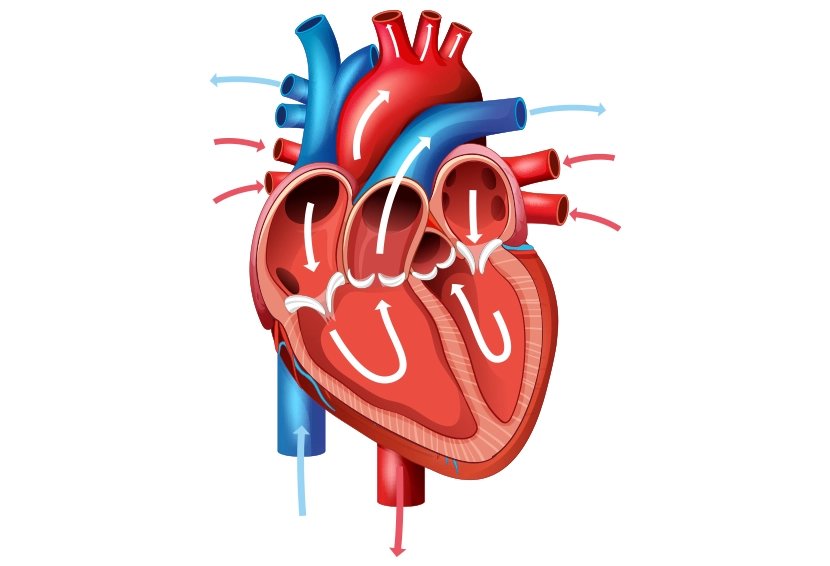
Women with pre‑existing heart disease, hypertension, diabetes, or autoimmune conditions (like lupus) come under the high-risk category.
Conditions present before pregnancy, like congenital heart defects, cardiomyopathy, or prior heart failure, may be accelerated during pregnancy.
After conception, blood volume and cardiac output increase by around 30–50%, straining the heart that is already structurally or functionally compromised.
Conditions like mitral or aortic stenosis involve narrowed valves that restrict blood flow.
High blood pressure in the pulmonary arteries (those taking blood from the heart to the lungs) makes right‑heart pumping extremely challenging.
If the aorta is already weakened and prone to dilation, this can increase the risk during gestation.
A previously damaged heart has a limited reserve; the extra workload of pregnancy can further complicate the condition.
Anticoagulation requirements are harder to balance in pregnancy, increasing the risk of valve thrombosis, stroke, or bleeding.
Gestational hypertension (high blood pressure) increases afterload on the heart, putting extra pressure on it.
Conditions such as diabetes, dyslipidemia, and insulin resistance can contribute to ischemic heart disease and other cardiac issues.
Pregnancy at old age makes the heart less able to handle the pregnancy‑induced blood volume increase.
Scarred or narrowed coronary arteries may not be able to match the increased oxygen demand of pregnancy, further increasing the risk.
In short, the heart is already compromised, and pregnancy makes it work harder to fulfill the oxygen and blood demand. Plus, labor and delivery add to the heart's workload too, increasing the complications.
Many normal pregnancy symptoms, such as dizziness, mild swelling, and fatigue, may mimic heart disease. Hence, heart doctors in Chennai may order the following tests for accurate diagnosis and timely management.
Uses sound waves to generate real‑time images of the heart’s structure and function.
ECG records the heart’s electrical activity. This helps detect abnormal rhythms, ischemia, or prior heart‑muscle damage.
Measure markers such as cardiac enzymes (troponin), B‑type natriuretic peptide (BNP), etc. These help confirm heart‑muscle injury, heart‑failure severity, or other related conditions.
A chest X‑ray shows heart size and lung congestion; an MRI gives detailed views of the heart muscle, valves, and vessels without using radiation.
It is a specialized ultrasound that evaluates the baby’s heart structure, rhythm, and blood flow inside the womb. Therefore, congenital heart defects or rhythm problems can be detected early through a fetal echocardiogram.
The best heart specialists, like those at the leading hospital Artemis Cardiac Care, focus on comprehensive care to manage gestational cardiac conditions:
The treatment plan may vary based on the type and severity of the condition and other individual factors.
Artemis Cardiac Care is known to offer comprehensive care for expectant mothers dealing with heart conditions. Our multidisciplinary team offers a gestation-friendly approach that combines advanced technology with specialized expertise. We are known to provide care that ensures the safety of both mother and baby.
We provide a full spectrum of services, such as
Watch the patient recovery testimonials here.
Visit the best nearby pregnancy heart care specialist in Chennai to prevent further complications.
Call us at +91 9070902010 (24/7).
Disclaimer: This blog is for informational purposes only and does not intend to replace expert advice. For any heart-related condition, follow your doctor’s advice only.

Chief Director Cardiology Department
Meet the doctorFrom Recent Advancements in Heart Care to Tips and Tricks to make your Heart Healthy Again, stay updated with reliable and informative blogs by our experts.

 WhatsApp Us (24/7)
 +91 9070902010 (24/7)


 Previous
.webp)