

The incidence of heart diseases in India has grown steadily over the past 30 years, and eating habits have been a major contributing factor. According to a study on The Changing Patterns Of Cardiovascular Diseases And Their Risk Factors In The States Of India, there has been a significant increase in the prevalent cases of cardiovascular diseases from 25.7 million in 1990 to 54.5 million in 2016.
A 2021 analysis on Cardiovascular Diseases Attributable To Dietary Risk Factors In India in the last three decades pointed out that dietary risks made up 38.48% of all cardiovascular disease-related deaths in India. This was mostly attributed to a diet which was:
WHO suggests that cardiovascular diseases can be prevented by addressing the risks, which include an unhealthy diet.
The 2024 Dietary Guidelines for Indians released by the ICMR-National Institute of Nutrition emphasize reducing salt intake, using oils and fats in moderation, and minimizing the consumption of sugar and ultra-processed foods.
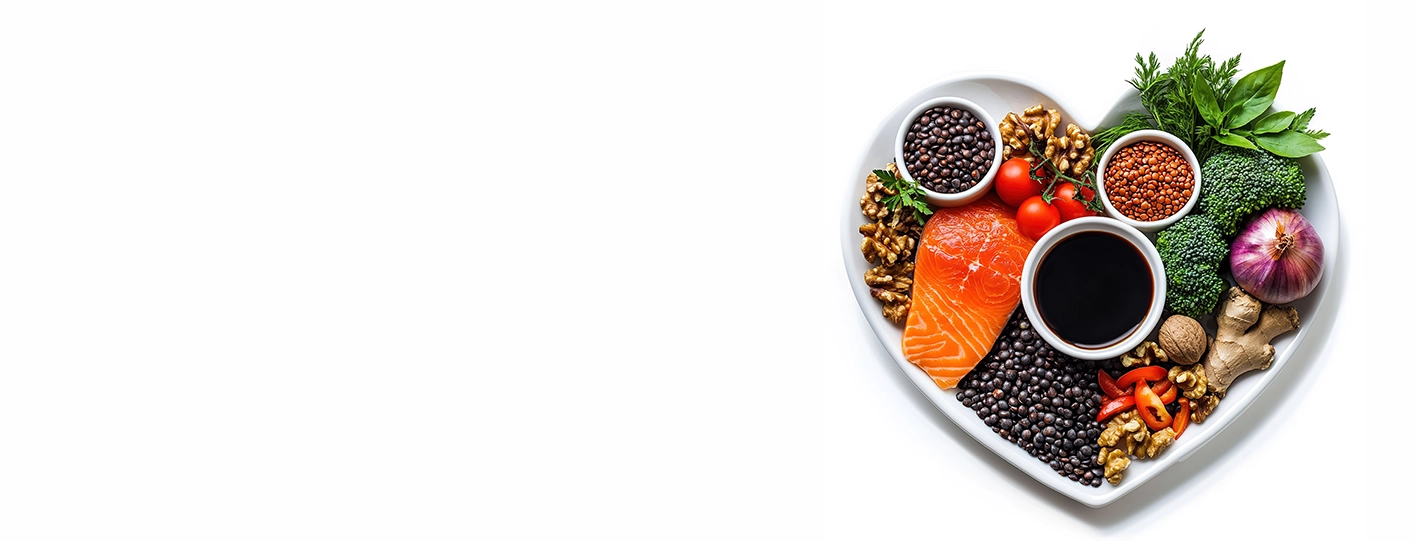
If you plan on taking a heart-healthy diet, this is what your plate should look like:
Another quarter should comprise proteins, which could be both veg and non-veg.
All the food items should be prepared with very little oil, and you should avoid putting in too much salt.
Top foods that can support your heart health include:
Fresh fruits and vegetables are a wonderful source of fiber, potassium, antioxidants, and vitamins. All of these can help to keep your blood pressure under control and keep your blood vessels healthy. Green leafy vegetables like spinach, methi, and collard greens, along with colorful vegetables like carrots, broccoli, bell peppers, etc., are excellent for daily intake.
Fruits that can help support your heart health include apples, oranges, papaya, guava, banana, pomegranate, and berries.
When you are making your plate, ensure that half of it is filled with fruits and vegetables.
The National Heart, Lung, and Blood Institute recommends vegetables such as leafy greens, broccoli, and carrots, along with fruits such as apples, oranges, bananas, and pears, as part of heart-healthy eating.
According to Mayo Clinic, eating whole grains regularly can significantly help to decrease the risks of various heart diseases and improve crucial cardiovascular health markers. This is because whole grains are rich in dietary fiber, which is known to lower the levels of LDL, or bad cholesterol.
These contain complex carbohydrates, which can help to maintain your blood pressure levels and also aid in weight management. Whole grains that you can include in your diet on a daily basis include:
Legumes are the best-known source of plant-based proteins. These are loaded with complex carbohydrates and fiber and low in fat. Since these are rich in soluble fiber, pulses bind and trap the cholesterol present in the digestive tract and help to eliminate it from the body. Studies have shown that adding only half a cup of cooked pulses to your diet on a regular basis can help to lower LDL cholesterol.
Potassium, magnesium, and other minerals present in legumes can help to keep your blood pressure in control, and since it also has a low glycemic index, eating these is not going to abruptly spike your blood sugar.
Eating a handful of nuts and seeds on a regular basis can help to lower the risks of heart diseases. Walnuts are rich in alpha-linolenic acid (ALA), which helps to fight inflammation and supports a healthy heart rhythm. Pistachios are a great source of protein, potassium, and plant sterols that prevent cholesterol from being absorbed in the gut. Almonds contain monounsaturated fats, fiber, plant protein, and vitamin E, which work to lower LDL. Cashews and hazelnuts are a wonderful source of magnesium and heart-healthy unsaturated fats that help to keep your blood pressure in check.
Seeds like flax seeds, chia seeds, and pumpkin seeds also help to support healthy cholesterol levels, regulate blood sugar, and provide antioxidants. Just add 28-30 g of nuts and seeds to your regular diet and see the difference for yourself.
We all know that fats are not good for the heart, but this is not true for all fats. Monounsaturated and polyunsaturated fats that are found in seed oils, nuts, seeds, oily fish, etc., can help support HDL levels when taken in moderation. Heart-healthy oils include extra virgin olive oil, mustard oil, groundnut oil, canola oil, sunflower oil, and flaxseed oil.
DASH diet stands for Dietary Approaches to Stop Hypertension. It has been developed through detailed research that was sponsored by the US National Heart, Lung, and Blood Institute. There have been a lot of studies related to this diet.
The DASH diet is very simple, and you do not need any fancy ingredients for it. For a 2,000-calorie daily intake, it suggests:
It also suggests taking nuts, seeds, and legumes at least 4 to 5 times in a week, and no more than 5 sweets should be taken in a week. The fewer, the better.
As far as the salt intake is concerned, you should not take more than 2,300 mg a day, which is roughly equal to 1 teaspoon of salt. If you are taking a low-sodium salt, take 1,500 mg.
Research and studies have shown that the diet can not only help to lower blood pressure but may also bring down the levels of LDL cholesterol. The good part is that it suits Indian kitchens as well. Dal, sabzi, roti, dahi, fruits, everything fits into our Indian meal plans. The salt recommendation also matches the one set by ICMR-NIN dietary guidelines for Indians in 2024.
A heart-healthy diet does not require fancy ingredients or complicated preparation. All it needs is for you to make sensible choices: choose more whole foods, less salt, less sugar, better fats, and indulge in physical activities regularly. DASH diet is a well-researched diet that has proven to be beneficial for people with hypertension, which is a major risk factor for heart diseases in India. To know more about a heart-healthy diet and whether the DASH diet is a good option for you, get in touch with our team at Artemis Cardiac Care.
Q1: What is the best diet for a healthy heart?
A: The best diet for a healthy heart is one which is rich in vegetables, fruits, whole grains, pulses, nuts, and fish, with very limited salt, sugar, and saturated fats. Two of the most popular diets are the DASH diet and the Mediterranean diet.
Q2: Which foods help reduce cholesterol naturally?
A: Foods that can help to naturally reduce cholesterol include oats, barley, pulses, nuts, flax seeds, fruits, and vegetables, as all of these are rich in dietary fiber, that helps to prevent the absorption of cholesterol in the gut.
Q3: How much salt is safe in a day?
A: As per the WHO recommendations, the quantity of salt that can be consumed safely in a day is under 5 g.
Q4: Can the DASH diet be followed by vegetarians?
A: Yes, the DASH diet can be easily followed by vegetarians since it contains vegetarian sources of protein like pulses, soya, paneer, nuts, and low-fat dairy products.
Q5: Are eggs and non-vegetarian foods allowed in a heart-healthy diet?
A: Yes, eggs and other non-vegetarian foods are allowed in a heart-healthy diet. Choose lean meat over red meat and processed meat.
References
Medical Disclaimer: This blog is for general awareness only and is not a substitute for professional medical advice, diagnosis, or treatment. Dietary needs vary with age, existing conditions, and medications. Please consult a qualified cardiologist or dietitian before making significant changes to diet or lifestyle.
From Recent Advancements in Heart Care to Tips and Tricks to make your Heart Healthy Again, stay updated with reliable and informative blogs by our experts.

 WhatsApp Us (24/7)
 +91 9070902010 (24/7)


 Previous



.webp)